Short answer
Cold air comes down the chimney when the damper is warped, rusted or not fully closed, letting heavy outdoor air in the flue sink into the room. In older Nassau County houses, the stack effect on cold nights, exhaust fans and wind make it worse. Start by checking that the damper seals, then consider a top-sealing damper, glass doors or a chimney plug, which must come out before every fire.
Why Cold Air Comes Down the Chimney in Winter
Cold air coming down the chimney is a familiar winter complaint in older Nassau County houses, and the cause is mostly physics. A chimney is a tall masonry column open to the sky. With no fire burning, it fills with outdoor air, and the brick around it settles toward the outdoor temperature, especially when the stack runs up an outside wall. Cold air is heavier than warm air, so whatever the damper fails to stop sinks into the firebox and spreads across the floor of the room.
The house adds a second push. The EPA describes the stack effect: whenever it is warmer inside than out, heated air escapes through the upper levels of a building and replacement outdoor air is drawn in through openings lower down, and the effect grows stronger as the temperature difference grows. A first-floor fireplace is one of the largest openings low in most houses, so on the coldest January nights a leaky one becomes an air intake. Wind makes it worse. The EPA notes that wind creates high pressure on the side of a building facing it and low pressure on the far side, and houses on the hills above Manhasset Bay or on the necks that reach into Long Island Sound take gusts that sheltered streets inland barely feel.
Start at the Damper
The damper is the metal plate above the firebox that closes the flue when the fireplace is not in use. In many prewar and postwar houses across Nassau County, from the Colonial Revival homes of Munsey Park to the Capes of Franklin Square, it is still the original cast-iron throat damper. The Department of Energy's homeowner advice lists checking that fireplace dampers close properly among its air-sealing steps, and it notes that repeated heating and cooling can warp or break the metal over time, creating a channel for air loss. Rust from rain and damp air can also freeze a damper in either position.
- Is it really closed? Handles and chains do not always show where the plate sits. With the fire out and the ashes cold, look up with a flashlight; daylight around a closed plate means it is not sealing.
- Does the plate sit flat? A warped plate rocks on its frame or leaves a crescent-shaped gap along one edge.
- Is there rust on the hearth? Flakes on the grate or the firebox floor usually come from the damper or its frame.
There is one firm rule about closing it. The Consumer Product Safety Commission advises keeping the damper open until the ashes are cool and never closing it, or going to bed, while they are still warm, because an open damper may help prevent poisonous gases from building up indoors. Close it only once the ashes are completely cool, often not until the next day, and never the moment the flames die down. A plate that will not seal, a broken handle or a damper rusted in place calls for fireplace damper repair.
Top-Sealing Dampers, Glass Doors and Chimney Plugs Compared
Once the throat damper is sorted out, three common add-ons can cut the draft further, each with its own trade-offs.
Top-sealing damper
A top-sealing damper puts a lid on the top of the flue, opened and closed by a cable that runs down to the firebox. When shut, it closes against a gasket, so the flue is no longer an open column to the outdoors, and rain, leaves and animals stay out. CSIA suggests a top-mount damper, kept closed, on the least-used fireplace in a house where one fireplace pulls air down another. On a tall, exposed North Shore chimney, the unit has to fit the flue and the crown properly and hold up to wind.
Glass doors
Doors across the fireplace opening reduce how much room air moves through it; the EPA's technical description of fireplaces notes that some masonry fireplaces are fitted with doors and louvers to reduce the combustion air they draw in during a fire. They slow the exchange, but they are not a substitute for a damper that seals, and they leave the cold air in the flue sitting right behind the glass. Whether to burn with them open or closed depends on the door maker's instructions.
Inflatable chimney plugs
A chimney balloon or pillow is pushed up into the throat and inflated to fill the flue. The Department of Energy suggests one to seal the flue while the fireplace is not in use and says the balloons are designed to deflate within seconds of contact with heat if someone forgets to take one out. The danger is exactly that someone forgets: a fire lit under a plug starts with the flue blocked, and smoke and fumes come into the room until it gives way. Treat these rules as fixed:
- Put the plug in only after the ashes are cool, and take it out before every fire.
- Leave a reminder nobody can miss, on the screen, the doors or the grate, and tell everyone in the house, including guests and house-sitters.
- Never plug a flue that vents anything else. Gas logs need an open flue: the safety-inspection procedure printed with New York's Fuel Gas Code has the inspector confirm that the damper over gas logs in a wood-burning fireplace is fixed open. Some older chimneys also have a boiler or water heater connected into the fireplace flue, which the code allows only with a noncombustible seal below the connection and a way to inspect and clean the flue.
When Fans and a Tight House Pull Air Down the Flue
Some drafts start inside the house. Every exhaust fan pushes air outdoors, and that air has to be replaced from somewhere. The Department of Energy warns that a new kitchen range with a high-powered exhaust fan, or a major air-sealing project can depressurize a house, meaning more air is pulled out than comes back in. Bath fans and the clothes dryer add to the pull. In a depressurized house an unused chimney is an easy route for replacement air, so the fireplace breathes in cold air whenever the fans run, and the musty smell of old creosote can come with it.
If your house has two or more fireplaces, CSIA describes a related problem: the fireplace in use exhausts house air until the house is under negative pressure, and then outside air comes down the unused chimney, sometimes bringing smoke from the active fire back into the living area. Its preferred fix is a supply of make-up air for the house; a top-mount damper kept closed on the fireplace used least is the secondary one.
Negative pressure is about more than comfort. The same pull that drags cold air down a fireplace flue can draw exhaust back out of a boiler, furnace or water heater flue, which the Department of Energy calls backdrafting. Keep carbon monoxide alarms working on every level, and if one sounds, get everyone outside and call 911 before anything else. A heating contractor or energy auditor can run a worst-case depressurization test, the procedure printed in an appendix to the state's fuel gas code: doors and windows closed, fireplace dampers shut, every exhaust fan running at full capacity, then a spillage check at the draft hood of each gas appliance that vents into the chimney.
What to Check Yourself and What a Technician Does
Before calling, spend a cold, windy evening gathering clues. With the fire out and the ashes cool:
- Confirm the damper is fully closed and look for daylight around it.
- Hold a lit incense stick near the closed damper, the edges of the glass doors and the ash dump. The Department of Energy uses the same trick for finding air leaks: if the smoke stream travels sideways, air is moving through that spot.
- Note when the draft is worst: on windy nights, with the range hood or dryer running, or only when another fireplace is lit.
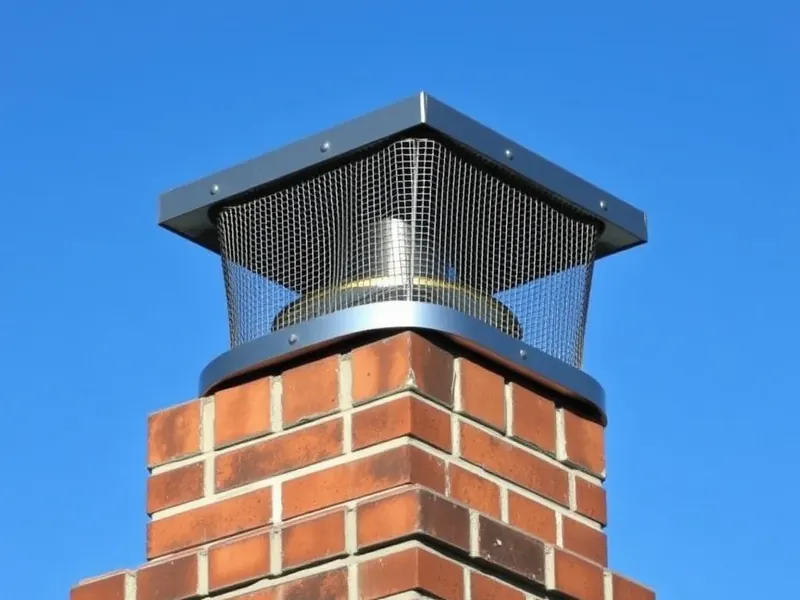
- Look at the chimney top from the yard. A missing cap, or a top that sits lower than a dormer or second-story addition close by, can turn gusts into downdrafts.
- Feel the walls and ceiling around the chimney breast. Cold spots mean air may be coming around the chimney as well as down it, through gaps where the framing meets the masonry.
A chimney inspection covers the rest. The technician checks how the damper opens, closes and seals, looks at the smoke chamber and flue, and checks the cap, the crown and the chimney's height against the familiar code rule that the top stand at least 3 feet above the highest point where it passes through the roof and 2 feet higher than any part of a building within 10 feet. The fix may be a new throat damper, a top-sealing damper, a better chimney cap, or sealing the gap where the chimney passes through the attic floor with sheet metal and furnace cement caulk, the fire-resistant materials the Department of Energy recommends around chimneys. Booking that visit in the fall, before the first hard freeze, means the draft is gone before the coldest weeks arrive. If smoke or fumes are coming into the house rather than just cold air, 1stCall Emergency Chimney answers 24/7.