Emergency Chimney Service in Manhasset, Day or Night
Chimney emergencies rarely wait for business hours. They happen on the coldest night in January when the oil boiler has been running nonstop, on a holiday evening with a full fire in the living room, or in the middle of a nor'easter blowing in off Manhasset Bay. 1stCall Emergency Chimney runs a true 24/7 emergency chimney service for Manhasset and the surrounding North Shore of Nassau County, so a real person answers whenever something goes wrong with your chimney, flue or fireplace and can put a local chimney pro on the way.
Our job on an emergency call is simple: make the house safe first, find out exactly what failed, and give you a clear, written plan for the permanent fix. Nobody should be pressured into major work at midnight. Most emergency visits end with a stabilized chimney, a documented cause and a follow-up visit scheduled at a time that suits you.
Situations That Call for an Immediate Response
If any of the following is happening, stop using the fireplace or heating appliance and call:
- Signs of a chimney fire - a loud rumbling or roaring sound, dense smoke, an intense hot smell, or sparks and flames shooting from the top of the chimney. Get everyone out and call 911 first; call us once the fire department has cleared the house.
- Smoke backing up into the room - often a blocked flue, a collapsed tile liner, a nest, or a damper stuck shut.
- A carbon monoxide alarm - leave the house, call 911, and have the venting of your boiler, furnace or water heater checked before it runs again.
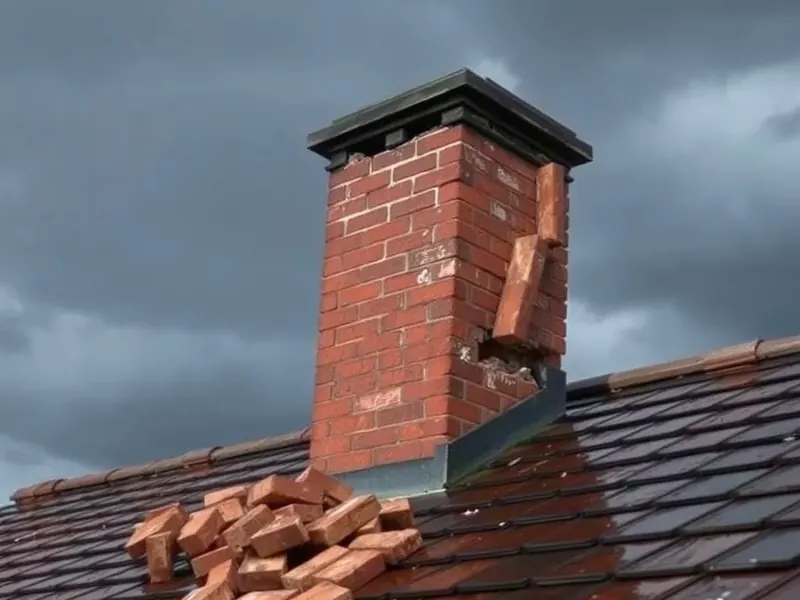
- Storm damage - a chimney struck by a falling limb, bricks on the lawn, a crown split open, or a cap torn off by high wind.
- Water pouring in - an active leak around the chimney during heavy rain that is staining ceilings or soaking the hearth.
- Animals in the flue - raccoons, squirrels or birds trapped in the chimney or smoke chamber.
Oil heat makes the carbon monoxide risk more than theoretical here. About one in four Nassau County homes still heats with fuel oil, against roughly one in twenty-five nationwide (US Census Bureau, American Community Survey 2020-2024), and the flue serving an oil boiler can clog with soot and scale or lose its liner without any visible sign from inside the house. When a CO alarm sounds in a Manhasset home, the chimney is one of the first places we look.
What Happens When You Call in the Middle of the Night
- Triage on the phone. We ask what you see, hear and smell, and walk you through immediate safety steps - shutting off the appliance, closing the fireplace doors, getting people and pets outside if needed.
- Dispatch. A technician heads out with lights, ladders, tarps, a chimney camera and the tools to secure the most common failures on the spot.
- Make it safe. That can mean checking for hot spots after the fire department leaves, clearing a blocked flue, removing an animal, tarping a damaged crown or taking down loose brick before it falls.
- Diagnose. Once the danger is under control, we scan the flue with a camera so the cause is documented rather than guessed at - which matters if you file an insurance claim.
- Plan the repair. You get photos, a plain-language explanation and a written estimate for permanent work, which you schedule on your own terms.
Why North Shore Chimneys Fail at the Worst Moment
Manhasset's housing stock is old by Long Island standards - nearly half of local homes were built before 1940. The Colonial Revival houses of Munsey Park, the 1930s Tudors of the Strathmore developments and the early 20th-century homes of Plandome were built with clay tile liners and lime-rich mortar that have now been through close to a century of winters. Many of those chimneys look solid from the street while the flue tiles inside are cracked or missing.
Then add the weather. Nor'easters drive rain sideways into brick and carry salt spray inland from Manhasset Bay and Long Island Sound, corroding caps, chase covers and flashing. Repeated freeze-thaw cycles pry apart weak joints until a crown splits or a course of brick lets go. A chimney can survive years of that and then fail in a single storm. That is why emergency response is the core of what we do - and why we pair it with routine chimney inspections in Manhasset that catch problems before they become late-night calls.
After the Emergency: Permanent Repairs Done Right
Stabilizing a chimney is only half the job. Depending on what we find, the follow-up may be chimney fire damage repair, a new stainless steel liner, a rebuilt crown or top-down masonry work. Every recommendation references the standard that applies - NFPA 211 for chimneys, fireplaces and vents, and listed components for liners and caps - so you know the plan is not guesswork.
The same round-the-clock availability extends across our North Shore service area, from Great Neck and Port Washington to Roslyn and Old Westbury. If you are not sure whether your situation counts as an emergency, call anyway. A two-minute conversation beats a night of guessing, and the answer is often reassuring.