Chimney Sweep and Repair in Baldwin, From Milburn to Today
Baldwin has gone by several names. It was known as Hick's Neck and later as Milburn before it became Baldwinsville in 1855, named for Thomas Baldwin, a merchant who ran a general store and kept a hotel at what is now the corner of Merrick Road and Grand Avenue. The community grew south along Grand Avenue toward the old stagecoach road that is now Merrick Road, and its shops still gather along Grand Avenue and around the Long Island Rail Road station. That long history shows in the houses, so chimney sweep and repair in Baldwin deals with chimneys from many building eras.
The state's post-Sandy recovery plan, which treats Baldwin and Baldwin Harbor as one planning area, found that more than half of the housing there was built before 1950 and about a third between 1950 and 1970. Census estimates for Baldwin alone place roughly a third of its homes before 1940. Chimneys of that age have often outlived more than one heating system, which is worth knowing before the first fire or the first cold night of the season.
Floodwater, Basements and the Bottom of the Chimney
On October 29, 2012, Superstorm Sandy drove a 10-foot storm surge into Baldwin and Baldwin Harbor at high tide. Most of the flooding came in through the canal systems of Parsonage Cove and Baldwin Bay and spread north beyond Atlantic Avenue as far as Merrick Road. Across the two hamlets, more than 2,500 housing units were reported damaged, and many homes took an average of three feet of water. Floodwater carried fuel tanks away, and because the sewer main leading to the Bay Park treatment plant was breached, sewage backed up through basement drains into homes.
The chimney is easy to overlook in that kind of cleanup, yet in a house with a basement its lowest part usually sits down there: the cleanout door, the base of the heating flue and the connector pipe from the boiler or water heater. Silt settles there, steel parts rust once salt water has touched them, and brick that soaked in salt water can keep crumbling as the salt dries out of it. Gas appliance manuals often say not to use an appliance if any part of it has been under water and to have a qualified service technician replace any control that was. CSIA recommends the more thorough Level 2 inspection, with a video camera run through the flue, after a weather event, a fire or a malfunction likely to have damaged the chimney. A chimney inspection at that level is the right follow-up for a basement that took on water.
Oil Tanks, Gas Lines and a Flue Sized for Another Fuel
The recovery plan singled out home heating oil as a flood hazard. Tanks leaked as floodwater displaced the fuel inside them, some were pushed off their foundations, and more than a year after the storm some residents could still smell heating oil in their homes. The plan proposed incentives to convert from oil to natural gas or other heat sources in the areas at greatest risk, along with a phase-out of fuel oil tanks south of Merrick Road. Today about two in three Baldwin homes heat with utility gas and about one in four still burns fuel oil (US Census Bureau, American Community Survey 2020-2024).
A conversion changes the chimney's job. A gas boiler sends cooler, wetter exhaust into a flue that was sized for an oil burner, and the water vapor can condense on the old tile and attack the mortar joints. CSIA recommends a Level 2 inspection whenever an appliance is replaced with one that burns a different fuel. The usual answer is a stainless steel chimney liner sized to the new appliance, or a separate vent where the appliance manual calls for one. The guide to oil to gas conversion and the chimney walks through the details.
Salt Air, Waterfront Cottages and Calls at Any Hour
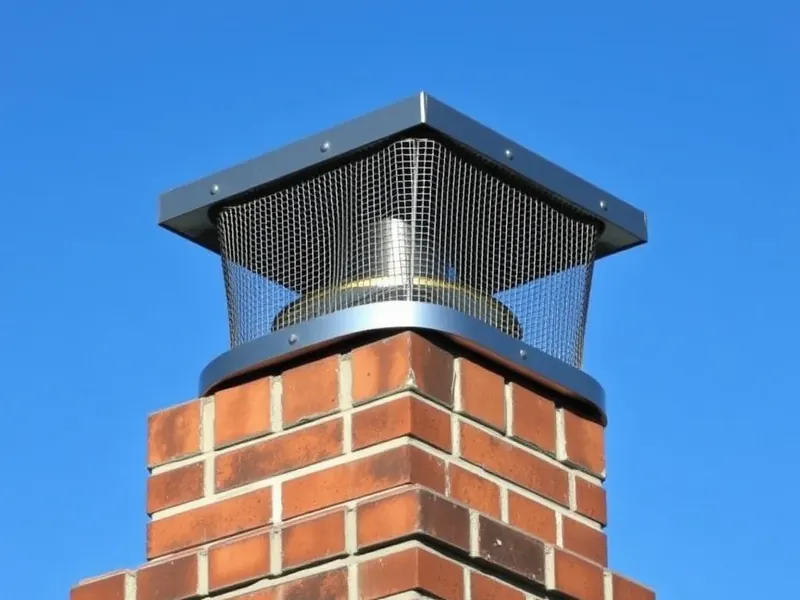
Baldwin's waterfront still holds original and renovated cottages, and their chimneys take the most weather. Salt spray rusts plain steel caps and loosens flashing, and wind-driven rain off the bay works into every crack in a crown. A stainless steel cap and a crown with a proper overhang keep most of that water out of the brick; the chimney cap and crown repair page explains both.
Most chimney sweep and repair in Baldwin can be booked ahead, and the weeks before the first cold snap are the easiest time for it. Storms are another matter. The recovery plan notes that many areas south of Merrick Road flood regularly at high tide or in heavy rain, and a bad storm can tear off a cap or put water into a basement flue overnight. 1stCall Emergency Chimney picks up at any hour for storm damage, a chimney fire, smoke pushing into rooms or a carbon monoxide alarm. If anything is burning or a CO alarm is sounding, get everyone out of the house and call 911 first. Once the house is secure, the damage is assessed in daylight, and the repair waits for a written estimate.